THE BONITA STONE BLOG:
Paver Colour Trends 2026
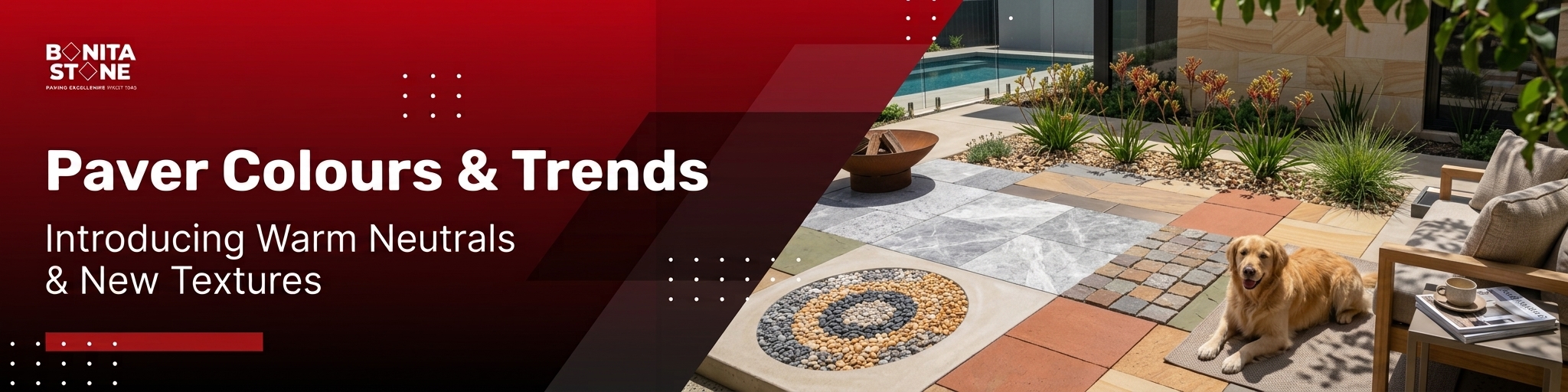
Paver Colour Trends 2026: Warm Neutrals Are the New Grey
If you've been scrolling renovation inspiration lately, you may have noticed something: the cool, charcoal-grey paving that dominated driveways and alfresco areas for the better part of a decade is quietly giving way to something warmer. Warm neutrals — sand, limestone, greige and soft caramel tones — are fast becoming the new default, reshaping how driveways, patios and pool surrounds are being designed in 2026.
The Great Grey Exodus: Why Warm Tones Are Taking Over
Grey paving had a good run. It was safe, modern and paired easily with the black-and-white render palettes that defined many new-build homes over the past ten years. But tastes move in cycles, and after years of monochrome exteriors, homeowners are craving something more inviting. Warm neutrals soften hard architectural lines, work beautifully with timber decking and greenery, and photograph particularly well in golden-hour light.
Sand, Limestone and Greige
Within the warm-neutral trend, three tones are coming up again and again: sandy beige, soft limestone and greige — that in-between shade that can read as grey in some light and warm taupe in others.
Their versatility is a major part of the appeal. Sand-toned pavers can work against coastal weatherboard homes just as easily as contemporary brick-and-render builds.
Travertine, sandstone and limestone continue to provide organic variation, while porcelain and concrete pavers now offer increasingly convincing warm-toned finishes.
The Colours Defining 2026
Warmth over coolness. Texture over flatness. These are the tones shaping contemporary paving projects.
Sand
A versatile sandy beige that works across coastal, contemporary and natural outdoor settings.
Limestone
Soft, natural and timeless, limestone brings an organic quality to patios, pool surrounds and courtyards.
Greige
Sitting between grey and taupe, greige offers a contemporary neutral without the coolness of traditional charcoal paving.
Large-Format Minimalism: Fewer Joints, Bigger Impact
Alongside the colour shift, there is a clear move towards large-format paving. Bigger slabs mean fewer joints, creating a cleaner and more expansive appearance — particularly effective for modern homes looking for a streamlined, minimalist finish.
Large-format pavers can also make smaller outdoor spaces feel more generous because the eye is interrupted by fewer joint lines.
Fewer Joints
A reduced number of joints creates a cleaner and more continuous visual field.
Bigger Impact
Larger paving formats can make contemporary alfresco and outdoor areas feel more expansive.
Better Preparation
Larger pavers demand careful base preparation and proper grading to help prevent uneven settling.
Modern Crazy Paving: Mixed Tones Done Deliberately
Traditional crazy paving has always had its fans, but 2026 is seeing a more considered version emerge. Rather than a purely rustic look, modern crazy paving mixes complementary warm tones within a single installation, adding depth without looking chaotic.
Curated Colour
Two or three related shades can be combined to create visual depth while maintaining a cohesive appearance.
Contemporary Layout
Tighter joints and a more consistent size range give the classic style a cleaner, more modern character.
Character & Texture
Particularly effective for garden paths, pool surrounds and feature courtyards where visual texture is welcome.
Choosing the Right Paver Colour for Your Project
A colour that looks perfect online or in a showroom can look very different once it is installed at home. Consider how your chosen paver will work with your property's light, surroundings and maintenance requirements.
Consider Your Natural Light
North-facing courtyards and shaded side paths can make the same paver appear quite different. Look at samples in the actual location where they will be installed.
Think About Maintenance
Lighter warm tones can be forgiving of everyday dust and dirt, while very pale finishes near garden beds may show soil transfer more readily.
Bring Home a Physical Sample
Screen colours and showroom lighting rarely reproduce exactly how a paver will look in your own backyard. Always view a physical sample before committing.
The safest approach is to compare physical samples against your existing exterior finishes, landscaping and natural light before making a final decision. The right paver colour should complement the whole property rather than simply look good in a showroom.