THE BONITA STONE BLOG:
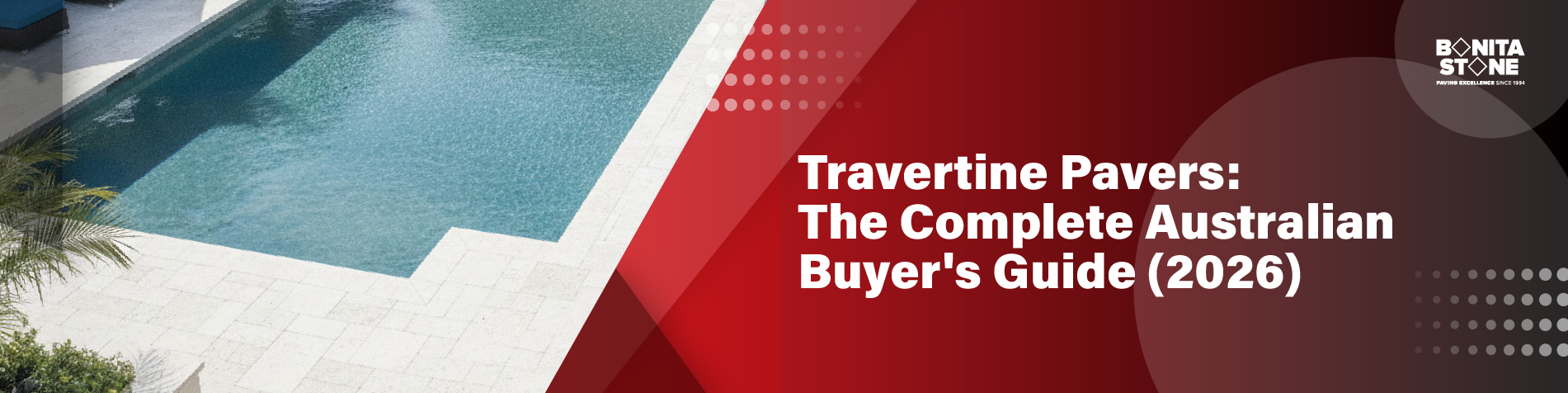
Travertine Pavers: The Complete Australian Buyer's Guide (2026)
Travertine Pavers: The Complete Australian Buyer's Guide (2026)
By Bonita Stone — Perth's natural stone paving specialists | Updated June 2026
Travertine has been used in some of the world's most enduring architecture — from ancient Roman baths to contemporary Australian pool decks. There's a reason it keeps coming back. As a natural stone, it offers warmth, texture, and a sense of permanence that engineered materials rarely match. But like any significant outdoor investment, it rewards the buyers who understand it.
This guide answers the questions Australian homeowners are actually asking in 2026 — about cost, suitability, maintenance, and whether travertine pavers still make sense for modern outdoor spaces. The short answer is yes. The longer answer is below.
Understanding the material
What Makes Travertine Different
Travertine is a form of limestone formed by mineral springs. As calcium carbonate precipitates rapidly around hot spring water, it creates the stone's signature cellular texture — those natural holes and channels that give travertine its character and, importantly, its thermal properties.
Unlike manufactured pavers, no two travertine slabs are identical. The variation in tone, veining, and texture is part of the material's appeal — and its value. It's quarried primarily in Turkey, Italy, and Iran, then cut and finished to specification. In Australia, it arrives as a finished product, classified by origin, cut direction, and surface treatment.
Travertine around the pool
Why Travertine Excels on Australian Pool Decks
Pool deck material selection in Australia comes down to three non-negotiables: heat management, slip resistance, and chemical tolerance. Travertine performs well on all three, which is why it remains one of the most specified natural stones for residential pools across WA.
The stone's porous cellular structure means it absorbs and dissipates heat rather than radiating it back. On a 38°C Perth afternoon, the surface temperature difference between travertine and dark concrete can be significant — enough to determine whether barefoot family members actually use the space. Tumbled finishes add a textured surface that grips when wet without the abrasiveness of exposed aggregate.
For pool-adjacent areas, Bonita Stone recommends sealing travertine with a penetrating impregnator specifically rated for submerged or splash-zone environments, reapplied every 12–18 months depending on pool chemical usage. Our guide on paver maintenance covers sealing schedules in full.
The Four Travertine Finishes Explained
Each finish changes how the stone looks, feels underfoot, and performs in different applications.
Tumbled
Stone is tumbled with abrasives to produce a naturally worn, rustic edge. The most popular finish for outdoor use in Australia — excellent slip resistance, forgiving on imperfect subbase, and suits both traditional and contemporary architecture. Natural holes are usually left unfilled.
Honed
Smooth, matte surface with a refined look. Holes are typically filled with grout for a cleaner appearance. Suits contemporary outdoor spaces and covered alfresco areas. Slightly more maintenance-intensive than tumbled as a smooth surface shows marks more readily.
Brushed
Wire-brushed to create an open, textured surface with visible linear grain. A middle ground between tumbled and honed — textured enough for good grip, refined enough for modern design palettes. Works particularly well on pathways, steps, and high-traffic zones.
Is Travertine Worth the Cost in 2026?
Travertine sits firmly in the mid-range for natural stone paving in Australia. It costs more than concrete or manufactured pavers, but significantly less than premium granite or large-format porcelain. The real value case is longevity: a well-sealed travertine installation maintained correctly can last 25–30 years without replacement. Compared against the replacement cycle of budget paving materials, the lifetime cost often favours natural stone. For a full comparison of stone versus porcelain pavers, our guide breaks down the real differences across cost, durability, and performance.
Built for Australian Conditions.
Travertine has been tested by climates far harsher than Perth's — and it performs.
Keeping it looking its best
Travertine Maintenance: What You Actually Need to Do
Travertine has a reputation for being high-maintenance — but that reputation is overblown when you have the right routine in place. The key principles are sealing, pH-neutral cleaning, and acid avoidance. Our full guide on how to maintain your pavers covers natural stone care in detail.
Is travertine out of style in 2026? Far from it. After a decade of polished porcelain and grey concrete dominance, Australian design has shifted back toward materials with warmth, texture, and natural variation. Travertine's organic character fits perfectly into the current preference for outdoor spaces that feel grounded, liveable, and authentic rather than clinical.
5 Things to Know Before You Install Travertine
What the competitor guides don't tell you — practical considerations for Australian conditions.
Subbase preparation determines everything
Travertine is a rigid natural stone — it won't flex or forgive a poorly compacted base. In Perth's sandy soils, a correctly specified compacted crushed limestone base with appropriate depth is essential. Any movement in the subbase will telegraph directly to the stone surface as cracking or lippage.
Filled vs unfilled — choose before you order
Unfilled travertine retains its natural holes and is the classic choice for outdoor applications — the voids add texture and drainage capability. Filled travertine has those holes grouted smooth, creating a more refined appearance suitable for contemporary alfresco areas. Both are valid; the decision should be made before purchase as it affects layout and installation method.
Seal before grouting on outdoor installations
Applying a penetrating sealer to travertine before grouting prevents grout from permanently staining the face of the stone — a mistake that is difficult and costly to rectify. This step is particularly important on honed and polished finishes where grout contrast is most visible.
Allow for natural colour variation in your order
Travertine is a natural material — variation between batches and even within a single order is normal and part of its appeal. Order 10–15% additional material to allow for cuts, breakage, and future repairs from the same batch. Trying to match travertine from a different quarry batch years later is rarely successful.
Use a wet saw — not an angle grinder — for cuts
Travertine cuts cleanly with a quality diamond-blade wet saw. Angle grinders produce rough, chipped edges that are difficult to finish neatly. For complex cuts around pools, steps, or curved garden beds, a professional installation is worth considering. The edge quality on a premium natural stone installation is one of the first things visitors notice.
Travertine Works Across the Whole Property.
Pool decks, walkways, alfresco areas, entries — the material scales beautifully across every outdoor application.
Perth's Travertine Specialists
Bonita Stone has supplied and installed travertine pavers across Perth for over 15 years — from single residential pool surrounds to large-scale commercial projects. Our team has seen travertine perform across every Perth microclimate: coastal, inland, limestone belt, and clay-heavy southern suburbs. When you speak with us, you're getting advice grounded in real WA project experience, not a product catalogue. Explore the full range of travertine pavers in our residential collection, or read our guide on choosing travertine for high-traffic areas.
Trusted across Perth
Experience You Can See Underfoot.
Common questions answered
Travertine Pavers — Frequently Asked Questions
Travertine is porous and requires sealing to resist staining from oils, wine, and pool chemicals. It's also acid-sensitive — vinegar, citrus, and harsh cleaning products will permanently etch the surface. Without annual resealing it can absorb moisture and discolour. These disadvantages are all manageable with a consistent care routine, but they do mean travertine rewards attentive owners more than low-maintenance alternatives like porcelain.
Travertine sits in the mid-to-premium range for natural stone paving in Australia. It's typically more affordable than granite or large-format premium porcelain, but priced above concrete, brick, and standard manufactured pavers. Tumbled travertine tends to be the most accessible entry point. The lifetime cost argument often favours travertine — a well-maintained installation can last 25–30 years, outlasting several cycles of budget alternatives.
Yes — travertine is one of the best-suited natural stones for Australian pool decks. Its light tones reflect rather than absorb heat, keeping the surface comfortable barefoot even on hot WA summer days. Tumbled and honed finishes deliver excellent wet-slip resistance. It also resists heat discomfort far better than dark concrete or dark stone alternatives, which can become painfully hot in direct afternoon sun.
Vinegar is acidic and chemically attacks travertine by dissolving the calcium carbonate in the stone. This etching leaves dull, rough patches that don't respond to cleaning — the damage is to the stone itself, not just the surface. It's often permanent without professional resurfacing. Never use vinegar, citrus-based products, or acidic tile cleaners on travertine. Always use pH-neutral stone cleaners and rinse spills immediately.
No — travertine is firmly back in design favour. After years dominated by polished porcelain and grey concrete, Australian homeowners and landscape designers have returned to natural stone for its warmth, texture, and individuality. Travertine's organic variation and warm tones align directly with the current preference for materials that feel grounded and authentic rather than sterile. In 2026, it's one of the most requested natural stone specifications for Perth residential projects.
Travertine isn't just a paving choice —
it's a long-term investment in your outdoor living space.
The homeowners who are happiest with their travertine installations are those who chose it understanding what it is: a natural stone with real character, real performance advantages in the Australian climate, and real maintenance requirements. It rewards care, and it repays that care with decades of beauty.
If you're considering travertine for a pool surround, alfresco, driveway, or walkway project in Perth, the Bonita Stone team can walk you through finish options, colour ranges, installation requirements, and a realistic cost estimate for your specific project. No obligation, no pressure — just real advice from people who know the material.