THE BONITA STONE BLOG:
Eco-Friendly Paving Solutions: Sustainable Stone Options for Australian Homes
As Australian homeowners become more conscious of the environmental impact of building and renovation decisions, the materials we choose for outdoor spaces are coming under greater scrutiny. Paving is no exception — and the good news is that some of the most beautiful options available are also among the most sustainable.
Choosing sustainable pavers in Perth doesn't mean compromising on aesthetics or performance. Natural stone in particular offers a compelling combination of low environmental impact, exceptional longevity and timeless appeal that manufactured alternatives simply can't match. This guide explores the most eco-conscious paving choices available to Australian homeowners today.
The bigger picture
Why Your Paving Choice Has an Impact
Outdoor paving covers significant surface area on most residential properties — driveways, patios, pathways and pool surrounds combined can easily account for hundreds of square metres. The material chosen for those surfaces has real environmental consequences, from the energy used in manufacturing to how the surface manages stormwater.
Australia's outdoor lifestyle means paved surfaces take serious punishment from UV exposure, temperature extremes and heavy rainfall. Choosing materials built to endure those conditions — rather than ones that need replacing every decade — is itself one of the most sustainable decisions you can make. Understanding how Australia's harsh climate affects paving is the first step in making a responsible long-term choice.
Material comparison
Natural Stone vs Manufactured Paving
Concrete pavers and clay bricks are manufactured products — they require kilns, cement production or significant chemical processing to produce. Natural stone, by contrast, is quarried directly from the earth, shaped and finished with minimal industrial intervention. The result is a material with substantially lower embodied energy than its manufactured counterparts.
Concrete production is one of the largest contributors to global CO₂ emissions. While individual paver units represent a small fraction of that output, choosing natural stone where possible is a meaningful step in reducing the environmental footprint of your outdoor project.
Natural stone paving options also tend to age far more gracefully than manufactured alternatives — gaining character over time rather than degrading — which is its own form of sustainability. A surface that never needs replacing is inherently the more responsible choice.
Three Sustainable Paving Approaches
Each of these strategies reduces environmental impact without sacrificing beauty or performance.
Permeable Paving Systems
Permeable paving allows rainwater to pass through the surface into the ground below, reducing stormwater runoff, recharging groundwater and minimising the heat island effect on your property. Natural stone pavers laid with open joints and a gravel sub-base are among the most effective and attractive permeable paving solutions available for residential use.
Locally Sourced Western Australian Stone
Limestone pavers sourced from Western Australia carry a significantly lower transport footprint than imported stone or manufactured pavers shipped from interstate. Choosing local materials supports regional industry, reduces freight emissions and typically results in stone that is naturally suited to WA's soils and climate — a genuine win on all fronts.
Long-Life Natural Stone Over Short-Life Alternatives
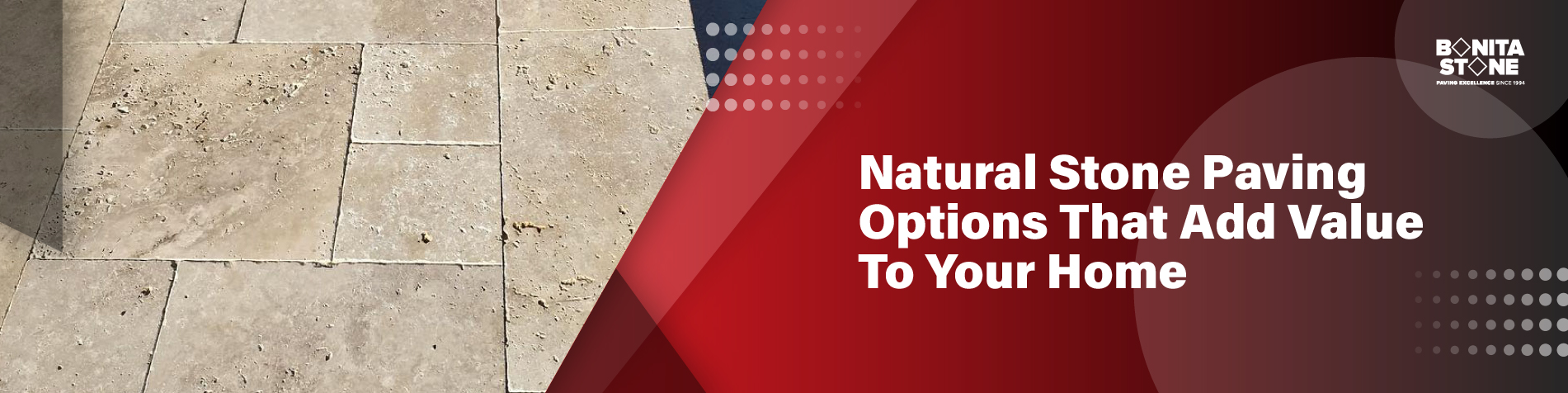
The most sustainable paving choice is often the one that lasts longest. Travertine versus concrete is a clear illustration of this — travertine installed correctly can last 50 years or more with minimal maintenance, while concrete pavers typically require repair or replacement within 15 to 20 years. Fewer replacement cycles means less material production, less waste and a lower lifetime carbon cost.
Longevity Is Sustainability
The most eco-friendly paving decision you can make is choosing a material that never needs replacing. Natural stone that endures for decades avoids the repeated manufacturing, transport and installation cycles that make short-life alternatives far more damaging over the long term than they appear at the point of purchase.
Built to Last. Better for the Planet.
Natural stone paving is one of the lowest-impact choices available for Australian outdoor spaces — and one of the most beautiful.
Practical Tips for Eco-Conscious Paving
Small decisions throughout the planning and installation process add up to a significantly greener outcome.
Choose lighter-coloured stone to reduce heat island effect
Dark paving surfaces absorb and re-radiate heat, raising ambient temperatures around your home. Lighter natural stones — particularly limestone and travertine — reflect more sunlight, keeping outdoor areas cooler and reducing the cooling load on your home during Perth's summer months.
Design drainage into your paving from the start
Rather than directing stormwater into the street, design your paved surfaces to channel runoff toward garden beds or rainwater collection points. Properly graded paving with strategic drainage channels reduces your property's contribution to stormwater overflow and keeps water on your land where it can do good.
Use polymeric sand or natural jointing materials
Jointing material affects both longevity and permeability. Polymeric sand locks pavers firmly in place without the need for cement, while still allowing some water infiltration. For a more natural approach, decomposed granite or fine gravel jointing allows fuller permeability and suits informal garden-style settings well.
Select sealants with low or zero VOC formulations
If sealing natural stone, choose water-based sealants with low volatile organic compound content. These protect your paving without releasing harmful chemicals into the air or soil. Many quality stone sealants now meet low-VOC standards and perform just as well as solvent-based alternatives.
Plan for adaptability rather than replacement
Paving laid on a sand or gravel base can be lifted, cleaned and relaid if your garden layout changes. This makes individual pavers reusable across the life of a property — a far more sustainable model than bonded or poured surfaces that must be demolished and disposed of when changes are needed.
Choosing natural stone isn't just an aesthetic decision — it's a long-term commitment to a material that asks very little of the planet to produce, and gives back decades of beauty, performance and value in return.
Caring for natural stone
Eco-Friendly Maintenance Practices
Maintaining natural stone in an environmentally responsible way is straightforward. As covered in our guide on why paver maintenance matters, a consistent routine protects your investment and ensures your stone looks its best — without the need for harsh chemical treatments.
Ready to Make a More Sustainable Choice?
The team at Bonita Stone can help you select natural stone paving that suits your home's style, your outdoor environment and your values. From locally sourced WA limestone to long-life travertine, our range is built for Perth's climate and Australian standards of living. Whatever your project budget, there's a sustainable stone option to suit.
Trusted across Perth
Quality You Can See. Built to Last.
The most sustainable home is one built with materials
designed to last a lifetime.
Choosing eco-friendly paving for your Australian home doesn't require compromise — it simply requires looking at materials differently. Natural stone has been used in outdoor spaces for centuries precisely because it performs so well over time. The same properties that made it the choice of architects and builders throughout history make it the most responsible choice today.
From locally sourced WA limestone to long-life travertine that outperforms concrete across every metric that matters, the range of sustainable stone options available to Perth homeowners is broader and more beautiful than ever. Investing in quality natural paving is an investment in your property, your outdoor lifestyle — and the environment. It also consistently delivers results that boost kerb appeal and property value for years to come.