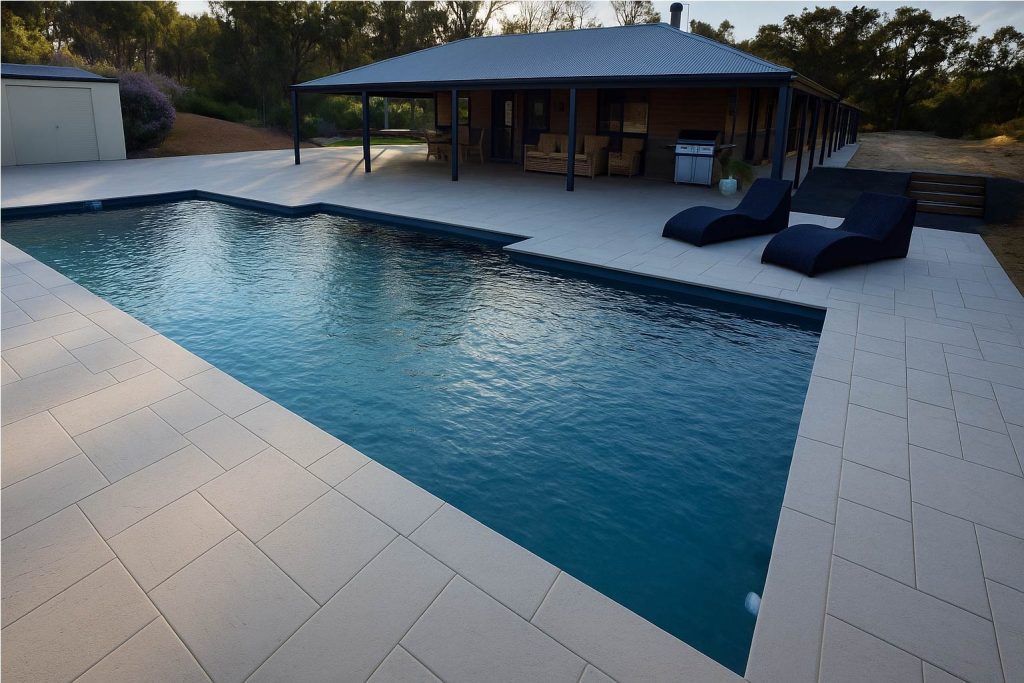
The Bonita Stone limestone guide
Limestone pavers: the complete guide
Everything Perth homeowners ask us about limestone pavers, in one place: where they work, what to check before you buy, how they’re laid, sealed and cleaned, and the myths worth ignoring.
What limestone pavers are
Limestone is a sedimentary rock, made mostly of calcite (a form of calcium carbonate) that builds up and compresses over millions of years. It’s dense, hard-wearing and has a lightly textured surface, which is why it has been a favourite for patios, pool surrounds and paths for so long.
The pressure during formation decides how strong and dense the stone ends up, and other minerals give it its colour. That’s why limestone comes in so many shades, and why quality varies so much from one product to the next.

Bonita Stone limestone at a glance
We make our limestone pavers at our own facility in Perth. Every paver is wet-poured and naturally cured.
- Colours
- 7
- Sizes
- 400 x 400mm, 300 x 600mm
- Thickness
- 40mm, 60mm
- Surface
- Natural or smooth
Why choose limestone pavers
Cool underfoot
Limestone reflects heat instead of soaking it up, so it stays comfortable for bare feet on hot Perth days.
Hard-wearing
Quality limestone handles heat, moisture and foot traffic, and is unlikely to need replacing for decades.
Ages well
Looked after properly, it looks as good years down the track as the day it was laid, and gains character over time.
Low maintenance
Once laid and sealed, a sweep and an occasional wash is all it needs to keep looking its best.
Suits any home
Neutral tones work with modern, coastal, Hamptons and traditional styles, so your paving can evolve with you.
Adds appeal and value
Natural stone has a high-end look that lifts the appeal of your outdoor spaces and your home.
Where to use limestone pavers
Limestone suits almost any outdoor area. The main thing that changes from job to job is the thickness of the paver and what it’s laid on.
| Area | Why limestone works | What to choose |
|---|---|---|
| Pool surrounds and coping | Cool underfoot and slip resistant | Salt tested or dip sealed, P4 or higher, matching coping |
| Patios and alfresco areas | Comfortable barefoot, suits any style | 30mm or thicker for areas with furniture and traffic |
| Paths and garden walkways | Natural look that suits greenery | A 40mm paver on a slab of about 90 to 100mm |
| Courtyards and entrances | Adds warmth and character | Larger formats for a clean, modern look |
| Steps and stepping stones | Cuts to size for custom features | Bullnose or square-edge pieces for step edges |
| Around firepits | Handles high temperatures | A dense, quality paver |
| Driveways | Lifts street appeal | A thick paver built for vehicle weight, on a slab of around 125mm |
Sloping driveway? Laying the pavers in a pattern helps lock them together and stops them slipping out of place.
Using limestone around a pool
Many people believe limestone can’t go around a pool. It can. The problem is cheap, soft limestone that hasn’t been salt tested: pool water, salt and chemicals soak into it and break it down fast. Choose the right paver and limestone is one of the most comfortable pool surfaces you can buy.
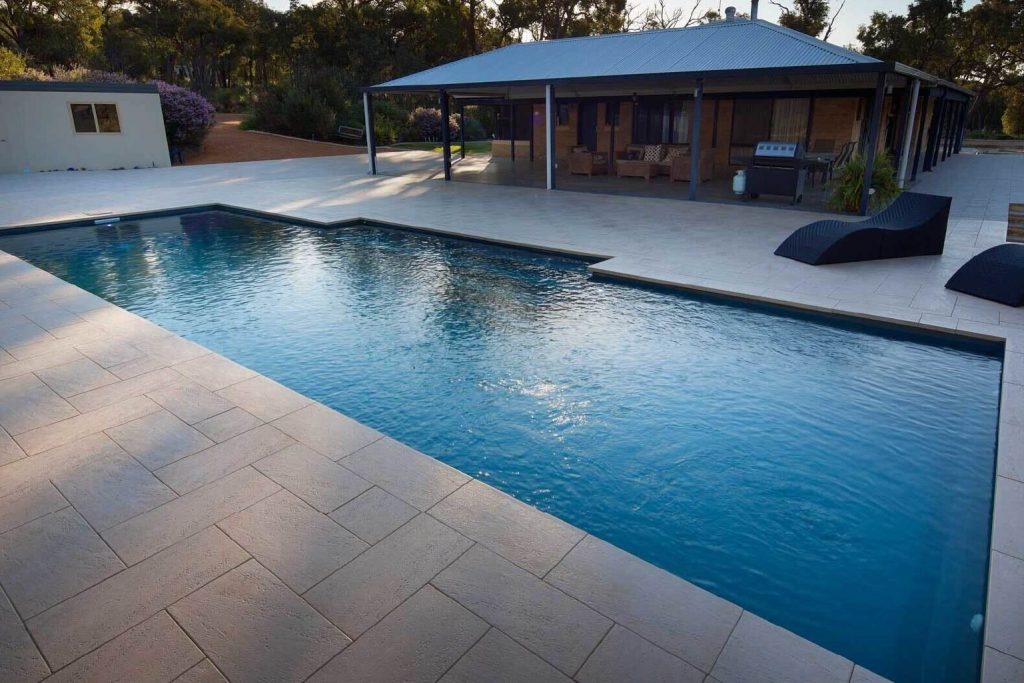
Pool paver checklist
0 of 4 checked
All four ticked. That’s a pool paver that will last.
To finish the edge, pair your pavers with matching bullnose or square-edge coping for a seamless pool zone. See our pool pavers, including our overhang pool coping, which you won’t find anywhere else.
How to spot quality limestone pavers
All limestone is sedimentary rock, but density and colour vary hugely. It can be very soft or very hard, and that difference decides whether your paving lasts a few years or a few decades. Saving a few dollars on cheap pavers can be the most expensive choice you make.
Low-quality limestone
- Soft and porous
- Stains easily
- Not salt tested, so it breaks down around pools
- Thin pavers that wear and crack sooner
Quality limestone
- High density and less porous
- Resists stains and mould better
- Salt tested or dip sealed
- 30mm or thicker for longer wear
Tip: ask friends, family or neighbours about their limestone, and ask your supplier how their pavers are made and tested.
Colours and design ideas
Limestone isn’t just white. It comes in creams, beiges, greys, pearls, browns and blues. Our range comes in seven colours: Limestone, Latte, Sandstone, Silver, Mocha, Terracotta and Charcoal. Tap a colour to see the same pool in each one.
Light neutrals for a resort feel
Cream and ivory shades brighten an outdoor area and give a relaxed, resort-style look. Lighter colours also stay cooler.
Grey for modern homes
Charcoal and soft-grey tones give a sleek, contemporary finish that suits minimalist designs.
Mixed formats for texture
Combine paver sizes, or use the French pattern or ashlar layouts, to add interest and sophistication.
Two colours together
Pairing a couple of colours together can create a spectacular, one-of-a-kind look.
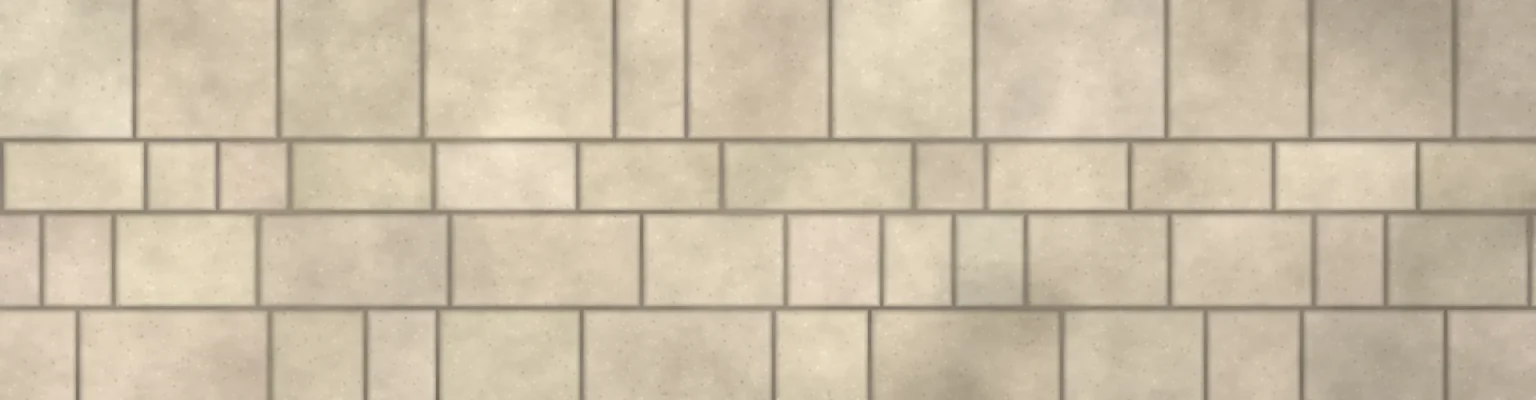
- Largest size
- Large square
- Rectangle
- Small square
What is the French pattern? Four different paver sizes laid in a continuous repeating pattern. It’s one of the most popular layouts for limestone. The bigger your pavers, the fewer pattern options you have.
How limestone pavers are laid
For the longest-lasting result, we recommend laying limestone on a concrete slab rather than sand. On sand or other subgrade, pavers can shift or sink. Bonita Stone supplies pavers only, so your paving contractor or landscaper will lay them. Here’s what a good installation looks like.
- Top coat of sealer protects the surface.
- Limestone paver, pre-sealed before laying.
- Grouted joint of at least 3mm.
- Flexible adhesive glues each paver down.
- Waterproofing stops efflorescence.
- Concrete slab: 90 to 100mm for paths, around 125mm for driveways.
Pour the slab
About 90 to 100mm of concrete for walkways and around 125mm for a driveway. Allow 14 days for it to cure.
Waterproof the slab
This stops efflorescence, a powdery residue that can seep up from the concrete through porous stone to the surface.
Pre-seal the pavers
Sealing before laying protects the edges as well as the surface, and makes grout haze far easier to remove from textured stone.
Glue the pavers
Apply a flexible adhesive to each paver, leaving a gap of at least 3mm between pavers for expansion and contraction.
Grout and clean
Grout the gaps, then clean any excess grout off the pavers straight away.
Top seal
Finish with a top coat of sealer. A water-based sealer penetrates deep into the stone.
| Slab for walkways | 90 to 100mm |
|---|---|
| Slab for driveways | Around 125mm |
| Slab curing time | 14 days |
| Gap between pavers | At least 3mm |
| Bonita limestone thickness | 40mm or 60mm |
Cutting limestone pavers
Limestone is tough, so cutting it needs the right tools. Always wear safety gear, including goggles and gloves.
- Measure and mark. Use a ruler and pencil. If you’re new to it, stick to straight, uniform cuts.
- Cut with a diamond floor saw. Secure the paver on a hard, steady surface and take your time. Rushing can crack the paver.
- Smooth the edges. Use a power sander to take off any rough or sharp edges.
Sealing limestone pavers
Limestone is porous, so it can absorb moisture and stains. Sealing isn’t compulsory, but it’s highly recommended if you want your pavers to last.
What sealing does
Repels moisture, helps stop stains, salt damage and organic growth like moss, and brings out the natural colour of the stone.
Choosing a sealer
Use a sealer made for limestone and follow the label. Choose one with a UV inhibitor for extra protection from fading. Finishes range from matte to high-gloss.
How to clean and care for limestone pavers
Do
- Sweep regularly to remove dirt and debris
- Wash with warm water, a pH-neutral detergent and a soft bristle brush
- Clean up spills as soon as they happen
- Reseal as needed, following your sealer’s instructions
- Use pads under outdoor furniture
- Check now and then for chips or cracks
Don’t
- Use acidic or harsh chemical cleaners
- Use an acid-based sealer
- Leave oil or food spills to soak in
- Skip sealing on porous stone
| Stain | What to do |
|---|---|
| Food and drink | Wipe up quickly. Sealed pavers stop spills soaking in. |
| Oil and grease | Use a poultice to draw the stain out of the stone. |
| Lichen and mould | Clean with water, a mild bleach solution or detergent before using a cleaning agent. |
| Rust marks | Limestone can contain iron, which can cause rust marks. Don’t use an acid-based sealer on limestone. |
Limestone myths vs facts
“Limestone can’t go around a pool.”
It can, if it’s salt tested or dip sealed and slip rated.
“It gets hot in the sun.”
It reflects light and absorbs less heat, and its pores carry heat down below the paver.
“It only comes in white.”
It comes in greys, pearls, beiges, browns and more. Our range has seven colours, from Latte to Charcoal.
“It’s slippery.”
Only polished finishes are. Honed limestone grips well, even when wet.
“It’s plain.”
Formed over millions of years, it carries natural texture and character.
“It’s a nightmare to clean.”
Sealed limestone resists spills and needs little more than a sweep and a wash.
“All limestone is the same.”
Density and quality vary hugely. Check before you buy.
“It’s not worth the cost.”
It lasts for decades and adds appeal to your home.
Limestone vs other materials
| Compared with | How limestone stacks up |
|---|---|
| Concrete | Concrete can cost less up front, but it lacks the natural look and cooling feel of limestone, and can fade or crack over time. |
| Travertine | Similar in many ways. Limestone is usually denser with a slightly smoother finish. Plenty of homes use both. |
| Limestone tiles | Pavers are larger and thicker and made for outdoor areas. Tiles are mainly for indoor walls and floors and are grouted in place. |
Cost and value
Natural stone usually costs more up front than concrete. What you get back is a surface that wears well, rarely needs repairs or replacing, needs little maintenance and adds appeal to your home if you ever sell. Over the life of your paving, quality limestone is real value for money.
Price depends on the paver, colour, size and quantity. Get a free quote for your project.
Environmental benefits
Natural material
Limestone pavers don’t need synthetic materials or excessive chemicals to make.
Less waste
Pavers that last for decades mean fewer replacements and fewer resources used.
Reusable
Limestone can be repurposed after use rather than sent to landfill.
Limestone paver FAQs
Do limestone pavers get hot?
No. Limestone reflects heat, so it stays cool enough to walk on barefoot in summer, which makes it a favourite around pools.
Are limestone pavers slippery?
Not with the right finish. Polished pavers are slippery when wet, but honed limestone gives good grip. Around a pool, choose a paver rated P4 or higher.
Are limestone pavers durable?
Yes. Quality, high-density limestone that’s laid on a concrete slab and sealed can last for decades. Check density, thickness and salt testing before you buy.
Can limestone pavers go around a pool?
Yes, if they’re salt tested or dip sealed and rated P4 or higher for slip resistance.
How thick should limestone pavers be?
Choose 30mm or thicker for longer wear and high-traffic areas, and a thicker paver again for driveways. Our limestone pavers come in 40mm and 60mm.
Can limestone pavers be used on a driveway?
Yes. Choose a thick paver designed to carry vehicle weight and lay it on a concrete slab of around 125mm.
How do you clean limestone pavers?
Sweep regularly and wash with warm water, a mild pH-neutral detergent and a soft bristle brush. Avoid acidic cleaners, and treat oil stains with a poultice.
Do limestone pavers need to be sealed?
It’s highly recommended. Limestone is porous, and a sealer made for limestone protects it from moisture, stains and organic growth.
What is the best way to lay limestone pavers?
On a waterproofed concrete slab, with each paver glued down, a gap of at least 3mm, then grouted and sealed.
Where can I see your limestone pavers?
Visit our display centre at 10 Corvette Rd, Bullsbrook WA 6084. It’s open Monday to Friday 7am to 2pm and Saturday 7am to 12pm.
Made in Perth since 1994
See our limestone colours in person
Our limestone pavers are made in Perth by a team led by Brett and Scott Petricevich, who laid pavers for a living before they started making them. Visit our Bullsbrook display centre or get a free quote.