THE BONITA STONE BLOG:
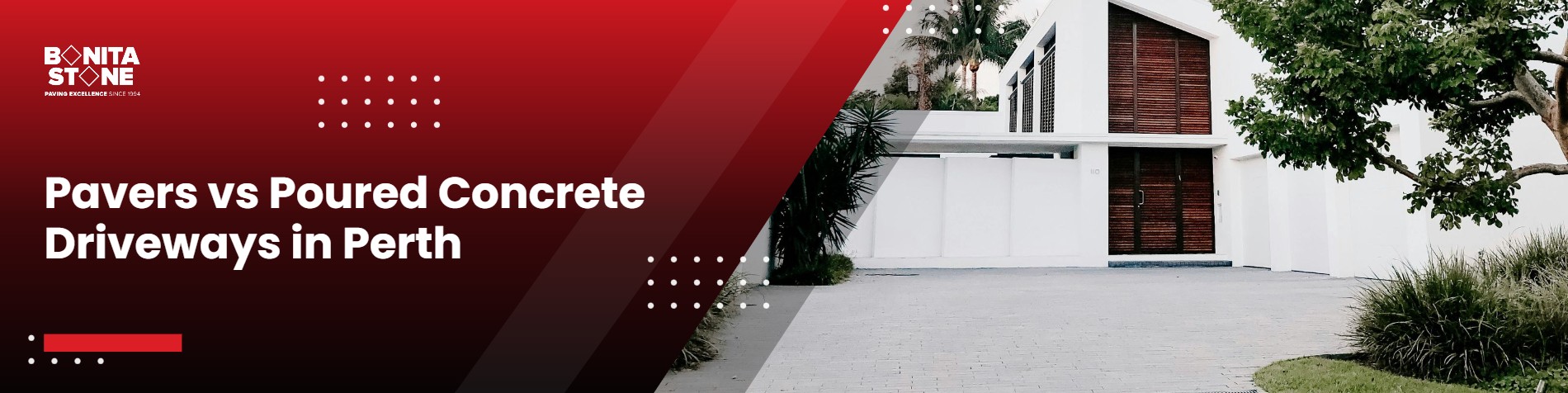
Pavers vs Poured Concrete Driveways in Perth: Which Is Better?
Your driveway is the first thing people see and one of the hardest working surfaces at your home. In Perth, most homeowners end up choosing between two options: pavers or a poured concrete slab. Both can work well, but they age very differently. Here's how they compare on looks, cracking, repairs and long-term value, so you can choose the right surface for your home.
The Short Answer
Poured concrete is often cheaper to put down at the start and gives a simple, continuous surface.
Pavers usually cost more upfront, but they offer far more design choice and are much easier to repair, because damaged pavers can be lifted and replaced one at a time.
If you plan to stay in your home for years, that difference adds up. See our range of driveway pavers for ideas.
How They Handle Perth Conditions
Perth's hot summers, winter rain and sandy soils all put a driveway under stress.
Ground Movement
A slab is one solid piece, so movement can crack it. Pavers spread small movements across many joints.
Drainage
Either way, the driveway needs a slight fall so water runs away from the house instead of pooling.
Heat and Glare
Lighter paver colours stay cooler underfoot and reduce glare on a sunny, north-facing driveway.
Repairs and Long-Term Value
A cracked or stained concrete slab usually means a patch that rarely matches, or cutting out and re-pouring a section. A cracked, stained or sunken paver can be lifted and replaced, and the area relaid, without touching the rest of the driveway. Keeping a few spare pavers from the same batch makes repairs almost invisible.
Access to Pipes and Cables
If a pipe or cable under the driveway needs work, pavers can be lifted and put back. A concrete slab has to be cut, and the repair will always show.
Design Choice
A slab can be coloured or finished in different ways, but it's still one continuous surface. Pavers give you shape, size, colour and laying pattern to play with. Popular Perth driveway choices include exposed aggregate pavers, available in seven colours, classic cobblestone pavers, and natural stone looks such as limestone and travertine.
What About Cost?
Concrete is often the cheaper upfront option, while pavers usually cost more to supply and lay. The real comparison is over the life of the driveway: how often it will need repairs, what those repairs will look like and how much the finish adds to your home's street appeal. Our guide to what determines paving cost and long-term value goes into more detail.
Built for Perth Driveways.
Choose a surface that handles the heat, the rain and the daily drive.
Driveway Paver Checklist
A Solid Base
A well-compacted base is what stops pavers sinking under cars.
The Right Fall
Allow a slight slope so water drains away from the house.
Made for Cars
Choose pavers made for vehicle traffic, not just foot traffic.
Locked-In Joints
Fill joints properly, and consider a joint stabilising sealer to help hold them.
Keep Spares
Store a few pavers from the same batch for future repairs.
Match Your Home
Pick colours and patterns that tie in with paths and the alfresco.
Frequently Asked Questions
Do pavers crack under cars?
Pavers made for driveways and laid on a properly prepared, compacted base handle daily vehicle traffic well. If one does crack, it can be replaced on its own.
Are pavers or concrete better for a sloping driveway?
Both can work. Textured pavers such as exposed aggregate give good grip, and the slope needs to be built into the base so water drains properly.
How do I stop paver joints washing out?
Fill the joints correctly after laying and consider a joint stabilising sealer, which helps hold the joint sand in place.
Do driveway pavers need sealing?
Not always. Sealing can help resist oil and stains and bring out colour, especially on smoother finishes. See do exposed aggregate pavers need sealing?
Choosing Pavers for Your Driveway?
Talk to the Bonita Stone team about colours, finishes and the right paver for vehicle traffic. Call 0434 086 084 or request a free quote.